If you are looking at commercial real estate in Williamsport, the biggest question is not just “Is this a good building?” It is “Will this location, use, and approval path actually work for your business or investment plan?” In a small-town market, those details can shape your timeline, your costs, and your long-term upside. This guide walks you through what matters most in Williamsport so you can make smarter decisions with confidence. Let’s dive in.
Why Williamsport stands out
Williamsport is a small town, with 2,083 residents counted in the 2020 Census. That means you are not evaluating the same kind of commercial market you would find in a larger regional center. The local customer base is more limited in size, so use, visibility, and fit matter even more.
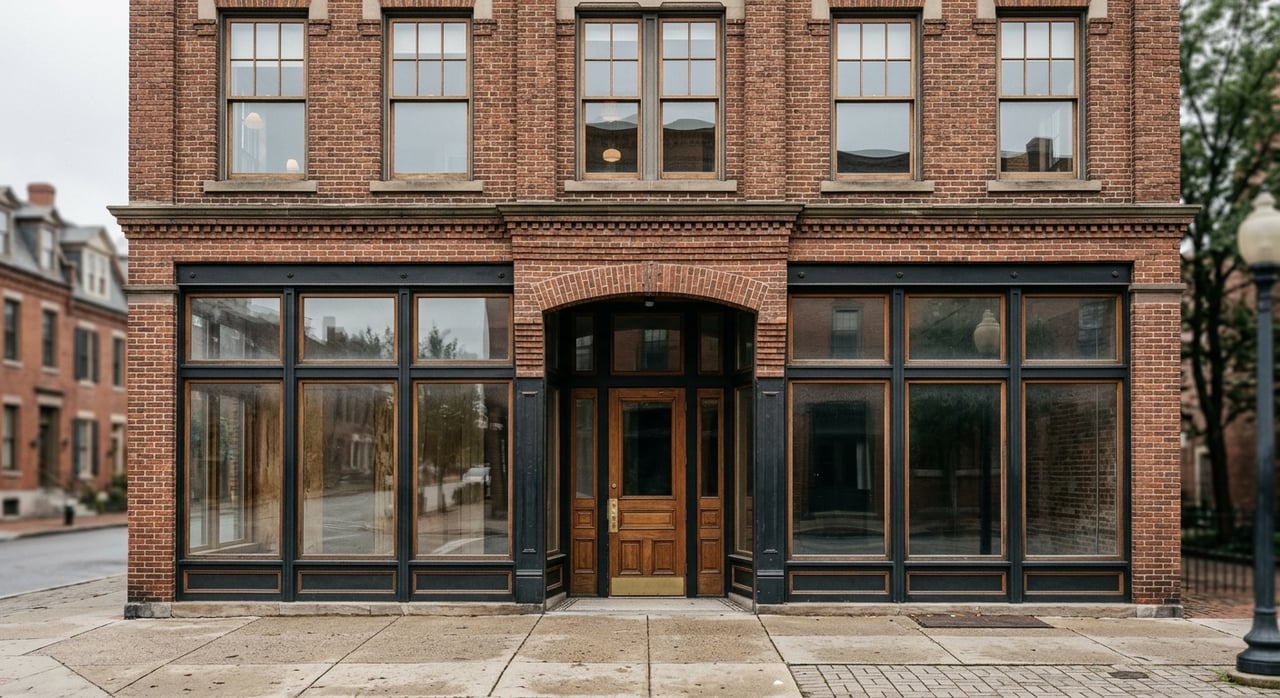
At the same time, Williamsport offers more commercial activity than many buyers might expect from a town of its size. The town business directory includes dining, lodging, personal services, gas stations, financial services, pharmacy, fabrication and welding, veterinary uses, and community-serving businesses. Main Street activity and nearby canal-related tourism also create a mix of local and visitor demand.
That combination can make Williamsport appealing if you want a property in a market that serves both residents and pass-through traffic. It also means your planning should stay realistic. You want to match the property to the town’s scale rather than assume metro-level demand.
Understand the local customer base
Commercial real estate works best when the site lines up with how people actually live and move through the area. In Williamsport, the data points to a car-oriented market. In the 2020 to 2024 ACS, 86.2% of workers drove alone to work, and the mean commute was 22.4 minutes.
That matters if you are considering retail, service, office, or mixed-use space. Easy access, clear parking, and visible signage can carry a lot of weight in a market where many customers arrive by car. In practical terms, a property that is slightly smaller but easier to enter and park at may outperform a larger one with awkward access.
Local demographics also help frame demand. The median age was 46.7, and 25.9% of residents were 65 or older. Depending on your intended use, that may support steady demand for everyday services, health-related uses, personal services, or convenience-oriented businesses.
Focus on US 11 visibility
For many commercial buyers and tenants, US 11, also known as Potomac Street, is the main corridor to watch. According to MDOT’s 2025 Williamsport corridor document, traffic on the Potomac River bridge over US 11 averaged 8,900 vehicles per day in 2023. That is meaningful exposure in a town this size.
The same report notes an important truck component. About 45% of truck trips were to or from I-81 and I-70, while about 32% were to or from Williamsport itself. If your use depends on passing traffic, delivery access, or visibility to regional drivers, that could be a major advantage.
Still, traffic count alone does not tell the whole story. US 11 through town is posted at 25 miles per hour, includes street parking in the study area, and has bike lanes between the C&O Canal entrance and MD 63. That mix can be positive for storefront exposure, but it also makes site layout and customer access more important.
Access can matter as much as exposure
In Williamsport, a visible building is only part of the equation. MDOT notes that sidewalks are not continuous in some areas and are mostly not ADA compliant, and driver confusion can occur at the Commerce Street intersection. Those conditions can affect how easily customers enter, park, and navigate the site.
That is why due diligence should go beyond “good corner” or “main road” language. You want to study driveway design, available parking, street parking rules, delivery flow, and whether customers can enter and exit the site without confusion. In a smaller market, friction at the curb can directly affect performance.
Zoning should be your first checkpoint
Before you get too attached to a property, confirm that your intended use is actually allowed. Williamsport’s zoning framework covers commercial uses, lot area and yard rules, flood plains, historic district regulations, off-street parking and loading, sign regulations, zoning permits, and nonconforming uses.
The town also notes that the online codes are for reference only and may not be the most recent version. That means a current confirmation with Town Hall matters. If you are underwriting a purchase or negotiating a lease, zoning should be one of your first calls, not something you save for later.
The town’s planning page also shows that commercial users may need both a building permit application and a proposed business application. That can affect timing early in the process, especially if your use requires a site plan or building changes.
Permitting often involves both town and county
Williamsport commercial properties generally move through a layered approval process. Washington County’s commercial permit booklet states that properties in Williamsport apply for building permits through the county after receiving zoning approval from the town zoning administrator. The county then reviews the project under the International Building Code and local amendments.
If a site plan is required, it must be approved before permit filing. Commercial applications can also require site plans or scaled plots, three sets of sealed construction drawings, and a building code analysis. If you are buying a building that needs work, this is a big part of your timeline.
No structure may be used or occupied before a Use and Occupancy certificate is issued. Utilities and inspections must also be approved before opening. If the property does not have public water and sewer, county health department water-sample approval can add time.
Check utilities early
Utility questions can delay a deal if you wait too long to ask them. Williamsport manages electric, water and sewer, and stormwater matters locally. That means capacity, service setup, and any upgrade needs should be reviewed early during due diligence.
This is especially important if you are planning a new commercial use in an older building. A space that worked for a prior tenant may not meet the needs of your operation without electrical, plumbing, or utility modifications. The sooner you identify those issues, the better you can budget and negotiate.
Floodplain and historic review deserve extra care
Because Williamsport sits along the Potomac River and the C&O Canal corridor, some properties may need added review for floodplain or historic considerations. The town code includes both flood plain and historic district provisions. That does not mean every property has a problem, but it does mean location-specific review is essential.
River-adjacent sites and older downtown buildings deserve especially careful diligence. These factors can affect what improvements are allowed, how long approvals take, and what costs come with redevelopment or renovation. FEMA’s Flood Map Service Center is the official source to confirm flood risk by address.
For buyers, this is one of the clearest examples of why commercial deals are about more than square footage and price. A charming building or well-located parcel may still come with use limits, review requirements, or added build-out costs that change the economics.
Buying or leasing is mostly about use
In residential real estate, buyers often start with features like bedrooms, bathrooms, and finishes. Commercial real estate works differently. In Williamsport, the first questions are usually about use, approvals, access, and build-out.
That applies whether you are buying or leasing. Before you commit, you should know whether the property supports your intended operation, what permits are required, whether the building meets current code, and what it will take to open for business.
If you are acquiring an existing business, due diligence becomes even more detailed. SBA guidance recommends reviewing contracts, leases, financial statements, tax returns, and sales agreements, with an attorney and accountant helping interpret the deal. That kind of review helps you understand not just the real estate, but the business risk tied to it.
Property taxes and incentives affect the numbers
Your underwriting should include local tax structure from the start. Washington County states that real property assessments are handled by the state on a triennial basis, and the county property tax rate is set annually. For FY2026, the county real property tax rate was set at $0.928 per $100 of assessed value.
The county also notes that commercial real property is not eligible for the semi-annual payment schedule used by owner-occupied homes. That may affect cash flow planning if you are comparing a commercial purchase to other investment options.
Washington County also publishes information on incentives for qualifying businesses. Eligibility is project-specific and parcel-specific, so it should be verified before you build it into your numbers. In other words, treat incentives as a possible benefit, not a guaranteed part of the deal.
Questions to ask before you commit
If you are evaluating commercial real estate in Williamsport, keep your due diligence centered on the issues that drive performance here.
- Is the parcel zoned for your intended use?
- Do you need a proposed business application, zoning approval, or a site plan before permits?
- Will customers and deliveries have easy ingress and egress?
- Does the property offer enough parking for your use?
- Are signage rules likely to affect visibility?
- Does the building already meet code and occupancy requirements?
- Will floodplain, historic district, utility, or water and sewer issues affect timing or cost?
- Are local tax obligations and any possible incentives reflected accurately in your underwriting?
Those questions can help you avoid a common mistake in small-market commercial real estate. A property can look attractive on paper but still be a poor fit if approvals, access, or build-out needs do not align with your plan.
Why local guidance matters
Commercial real estate in Williamsport rewards careful planning. The right opportunity may be a Main Street storefront, a mixed-use building, a service property on a visible corridor, or a longer-term investment play tied to location and redevelopment potential. But the strongest decisions usually come from understanding the local approval path, traffic patterns, and property-specific constraints before you negotiate too far.
That is where experienced local guidance can help. With more than 26 years of experience, over 2,700 properties sold, and broad Washington County market knowledge across residential, land, investment, and commercial transactions, Steve L Powell with Steven L Powell brings a disciplined, strategy-first approach to evaluating opportunities and helping you move with clarity.
FAQs
What matters most when buying commercial real estate in Williamsport?
- The most important factors are usually intended use, zoning, access, visibility, parking, permits, and any floodplain or historic review requirements.
Is US 11 a key corridor for Williamsport commercial property?
- Yes. US 11, or Potomac Street, is the main visibility corridor in town, with MDOT reporting 8,900 average daily vehicles on the Potomac River bridge in 2023.
Do Williamsport commercial properties need town and county approvals?
- Often, yes. The town handles zoning approval, and Washington County handles building permits and code review after town approval is received.
Can floodplain or historic rules affect a Williamsport commercial deal?
- Yes. The town code includes flood plain and historic district provisions, so some properties may face additional review or limits on improvements.
Are utilities important in Williamsport commercial due diligence?
- Yes. Williamsport manages electric, water and sewer, and stormwater matters locally, so service capacity and setup should be checked early.
Should you expect commercial leasing in Williamsport to work like residential leasing?
- No. Commercial space decisions are usually driven by use, approvals, code compliance, and build-out needs rather than residential-style features.