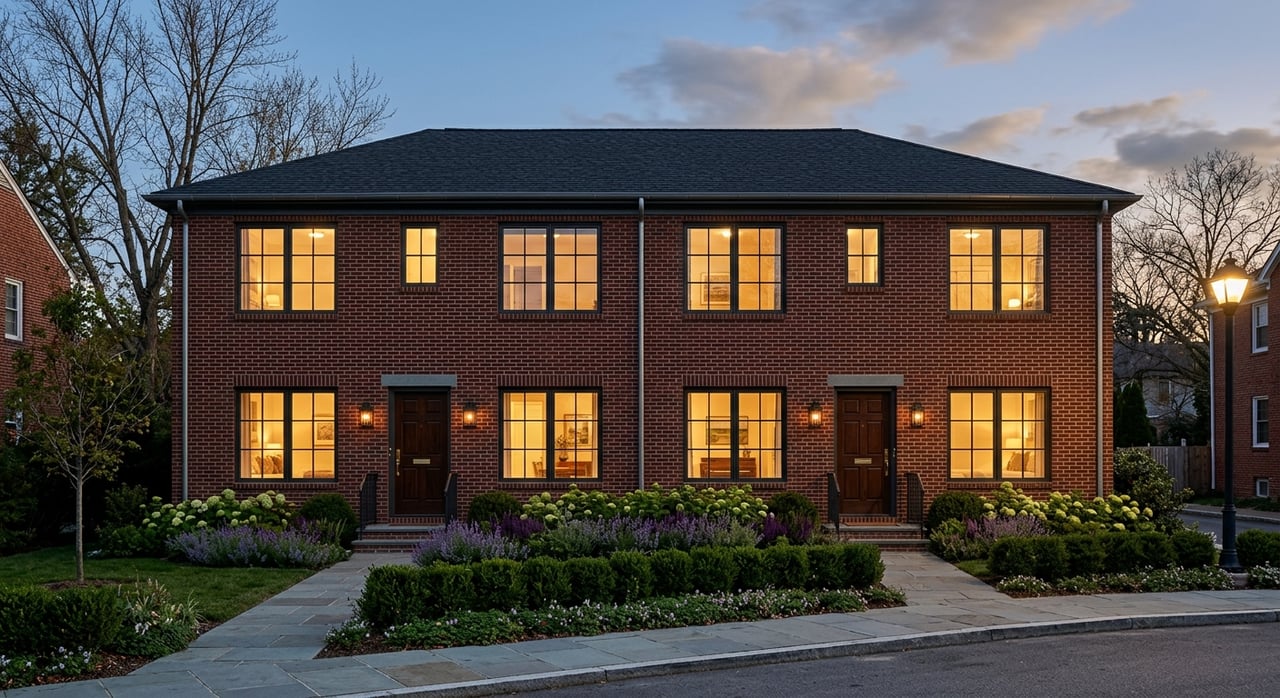
If you are looking at investment or multi-unit property in Hagerstown, it is easy to focus on the asking price and projected rent. The smarter move is to look deeper. In this market, renter demand, older housing stock, and local compliance rules can all shape whether a deal works on paper and in real life. This guide will help you evaluate Hagerstown properties with a more disciplined lens so you can spot risk, stress-test income, and make better decisions. Let’s dive in.
Why Hagerstown Gets Investor Attention
Hagerstown stands out as a more renter-oriented market than Washington County as a whole. In the 2020-2024 ACS, 56.7% of occupied housing units in Hagerstown were renter-occupied, compared with 30.7% in Washington County. That difference matters when you are comparing a city duplex, triplex, or small apartment building to a more detached-home-heavy county location.
The city also has a denser housing mix. About 36.5% of Hagerstown housing units are in 2-unit or larger structures, while Washington County is closer to 18.9%. For investors, that means the city is naturally better aligned with small multifamily strategies and house-hack style purchases.
Price positioning is another reason buyers take a close look at Hagerstown. The ACS reports a median owner-occupied value of $224,500 in the city versus $296,100 in the county. That does not guarantee better returns, but it can create a lower entry point for investors who want income-producing property in Washington County.
Start With Public Rent Benchmarks
Before you get too attached to a property’s pro forma, compare the seller’s rent assumptions to public benchmarks. In Hagerstown, the 2020-2024 ACS reports a median gross rent of $1,114. In Washington County, the median gross rent is $1,147.
You can also use HUD fair market rent figures as a stress-test tool. For FY2026 in the Hagerstown HMFA, gross fair market rents are listed at $869 for a studio, $961 for a one-bedroom, $1,261 for a two-bedroom, $1,700 for a three-bedroom, and $1,901 for a four-bedroom. These are not the same as market rent for every property, but they are a useful public reference point when checking whether projected rents seem realistic.
Another helpful clue is the local rent distribution. In Hagerstown city, 42.6% of rent-paying units fall in the $1,000 to $1,499 range, and 13.1% fall in the $1,500 to $1,999 range. That suggests a market that is still centered in moderate rent bands rather than a large luxury rental tier.
What That Means for Your Numbers
If a deal only works with aggressive rent growth or top-of-market assumptions, pause and rework it. Public data suggests Hagerstown supports meaningful rental demand, but it also points to a price-sensitive tenant base. Conservative underwriting usually gives you a clearer picture than an optimistic spreadsheet.
A practical approach is to compare current in-place rents, your projected post-improvement rents, ACS median gross rent, and HUD fair market rent ranges. If your plan sits far above those benchmarks, you need a very strong property-specific reason to justify it.
Older Housing Changes the Analysis
One of the biggest factors in Hagerstown is the age of the housing stock. In the city, 31.9% of units were built in 1939 or earlier. That is much older than the county overall, where 19.2% of units were built in 1939 or earlier.
Older properties can offer character and value-add potential, but they also change your renovation and reserve planning. Roofs, masonry, plumbing, electrical systems, windows, and interior finishes may all need closer review. If you are evaluating a duplex, triplex, or small apartment building in Hagerstown, you should expect inspections and repair budgeting to carry more weight than they might in a newer housing market.
This is especially important if your investment plan depends on quick unit turns or a light cosmetic update. In an older property, hidden costs can erase your margin fast. A lower purchase price does not always mean a lower total cost.
Lead Compliance Matters
For pre-1978 rentals, lead compliance is a major part of due diligence. The Maryland Department of the Environment says residential rental properties built before 1978 must be registered and renewed annually, and they are subject to lead-related requirements and inspection timing rules at certain triggering events.
Hagerstown adds another local layer. The city states that rental facilities must be registered, pay an annual license fee of $75 per rental unit, and complete exterior inspections every year plus interior inspections every 48 months at tenant vacancy. The city also says it cannot issue a rental license without current lead inspection certificates.
That means lead documentation should never be treated as an afterthought. If you are buying an older rental in Hagerstown, build compliance costs, documentation review, and inspection timing into your analysis from day one.
Watch Location Differences Inside the City
Not every Hagerstown submarket performs the same way. The city’s fair housing analysis notes that housing density is highest just west of downtown, the highest concentration of rental housing is in Census Tract 4, and vacant housing is concentrated in central and southern parts of the city.
For an investor, that means neighborhood-level differences can affect leasing, turnover, renovation strategy, and exit value. Two properties with similar unit counts may carry very different risk profiles depending on location, block condition, nearby vacancy patterns, and overall property condition.
This is where local knowledge matters. A strong investment decision is not just about the building. It is also about how that property fits within the micro-market around it.
Use Vacancy and Affordability as Reality Checks
Vacancy is one of the simplest public metrics you can use to test your assumptions. In the 2020-2024 ACS, Hagerstown’s rental vacancy rate was 4.4%, while Washington County’s was 4.9%. These are not property-specific forecasts, but they can help you gauge whether your vacancy assumption is too aggressive or too loose.
Affordability is just as important. In Hagerstown, 44.1% of rent-paying households spent 35% or more of income on gross rent. The city’s median household income was $52,221. In Washington County, 37.7% of rent-paying households spent 35% or more on gross rent, and median household income was $74,157.
That tells you many renters may be sensitive to even modest increases. If your underwriting depends on sharp rent bumps at renewal or near-zero vacancy loss, you may be overlooking a real local constraint.
A Simple Underwriting Framework
When you evaluate a Hagerstown investment property, it helps to triangulate these public indicators:
- ACS median gross rent for a broad local benchmark
- HUD fair market rent for a unit-type reference point
- Rental vacancy rate for a reality check on leasing assumptions
- Household income and rent burden data for affordability context
- Property age and compliance rules for capex and operating risk
No single metric tells the full story. Together, they give you a more grounded starting point.
Limited New Multifamily Supply Is Worth Noting
Supply trends are part of the picture too. According to the city’s report, from January through November 2024, Hagerstown averaged 4.7 building permits per month, while Washington County averaged 20.4. During that period, only 12 multifamily units were permitted in the city and 16 in the county.
That suggests new multifamily supply has been relatively limited, especially compared with single-family activity. For owners of existing rental property, that can be a supportive factor. Still, it should be treated as one input, not a guarantee of future rent growth or demand.
Red Flags to Catch Early
When you tour or analyze a Hagerstown multi-unit property, pay close attention to issues that can disrupt cash flow after closing.
Common examples include:
- Deferred maintenance in older systems
- Missing or outdated lead-related documentation
- Rental licensing gaps
- Interior or exterior conditions that may not meet the city’s minimum livability standards
- Rent projections that sit well above local public benchmarks
- Thin reserve assumptions for turnover or repairs
The goal is not to avoid every older property. It is to understand what you are buying and price the risk correctly.
Why Local Guidance Helps
Investment property decisions are rarely just about finding a cap rate online. In Hagerstown, the details matter: city versus county location, age of construction, licensing steps, lead compliance, vacancy assumptions, and submarket differences within the city itself.
That is where experience can make a real difference. With more than 26 years in the business, over 2,700 properties sold, and deep experience across Hagerstown, Washington County, and the broader Tri-State market, Steve L Powell and his team bring the kind of practical, strategy-first guidance that helps investors evaluate opportunities with more clarity. For multi-unit and income property buyers, that means looking beyond headline numbers and focusing on the issues that shape long-term performance.
If you are considering an investment or multi-unit purchase in Hagerstown, a disciplined review upfront can save you time, money, and avoidable surprises later. When you want a local, experienced perspective on pricing, risk, and property evaluation, connect with Steve L Powell with Steven L Powell.
FAQs
What makes Hagerstown attractive for multi-unit investors?
- Hagerstown is more renter-oriented than Washington County overall, with 56.7% renter-occupied housing in the city and a higher share of units in 2-unit or larger structures, which makes the city a natural fit for many small multifamily strategies.
How should you estimate rents for a Hagerstown investment property?
- Start by comparing the property’s current and projected rents to Hagerstown’s ACS median gross rent of $1,114 and HUD fair market rent figures by bedroom count, then adjust for the property’s condition, location, and unit mix.
Why do older Hagerstown properties need closer review?
- A large share of Hagerstown’s housing stock was built in 1939 or earlier, which can increase the importance of inspecting major systems, planning reserves, and reviewing compliance items before you buy.
What rental licensing rules apply to Hagerstown rental properties?
- The city says rental facilities must be registered, pay a $75 annual license fee per unit, complete annual exterior inspections, and complete interior inspections every 48 months at tenant vacancy.
What should you know about lead rules for Hagerstown rentals?
- For pre-1978 properties, Maryland requires rental registration and annual renewal, and Hagerstown says current lead inspection certificates are needed before a rental license can be issued.
How do vacancy and affordability affect Hagerstown investment analysis?
- Hagerstown’s 4.4% rental vacancy rate and the fact that 44.1% of rent-paying households spend 35% or more of income on gross rent suggest investors should use conservative assumptions for vacancy, renewals, and rent growth.