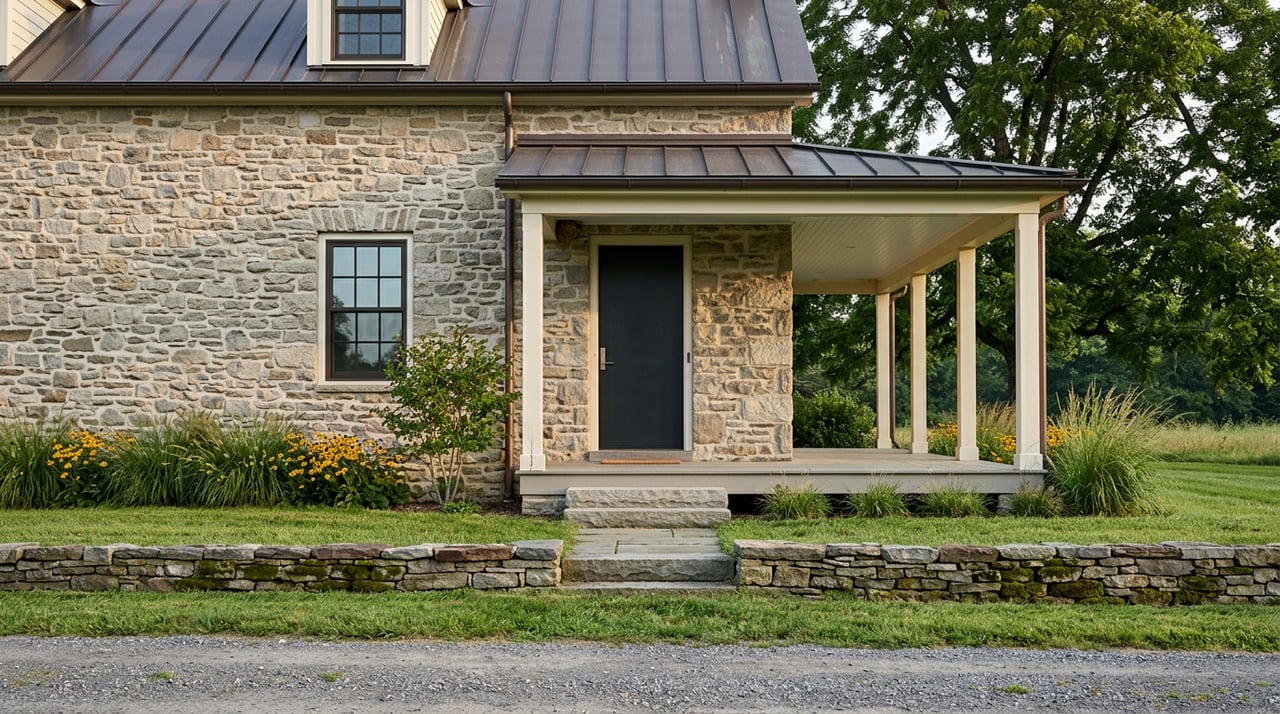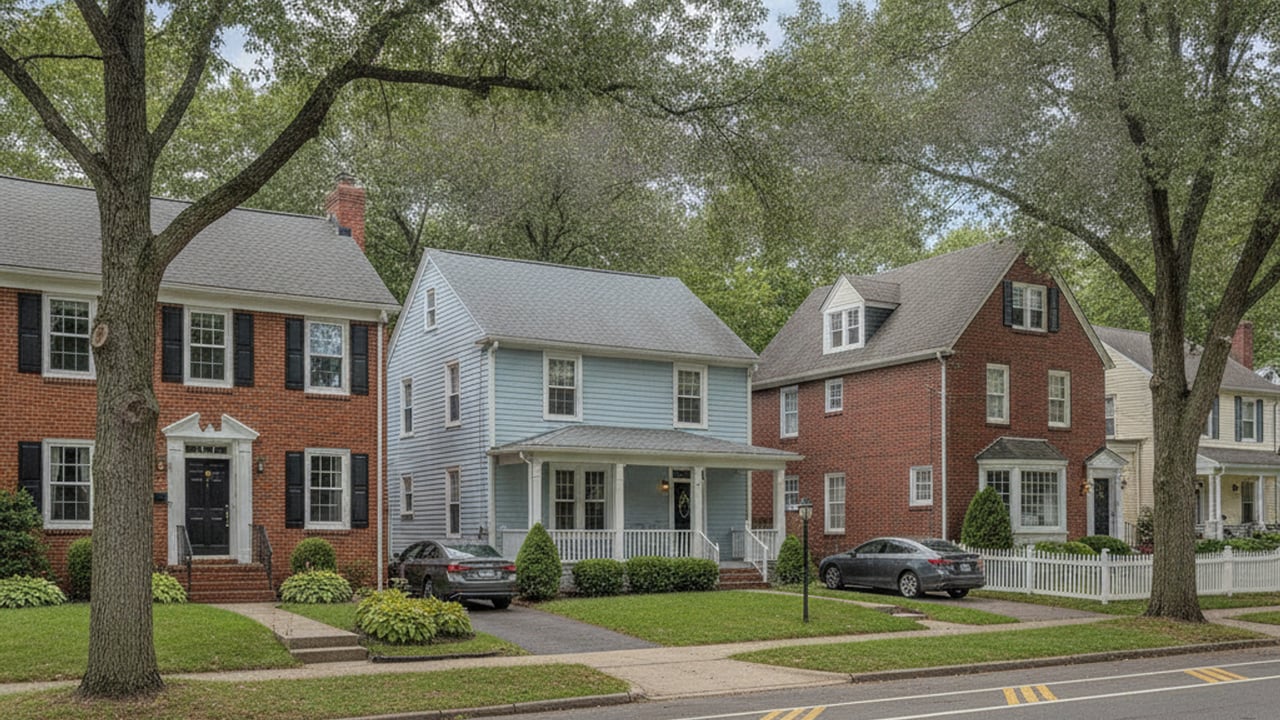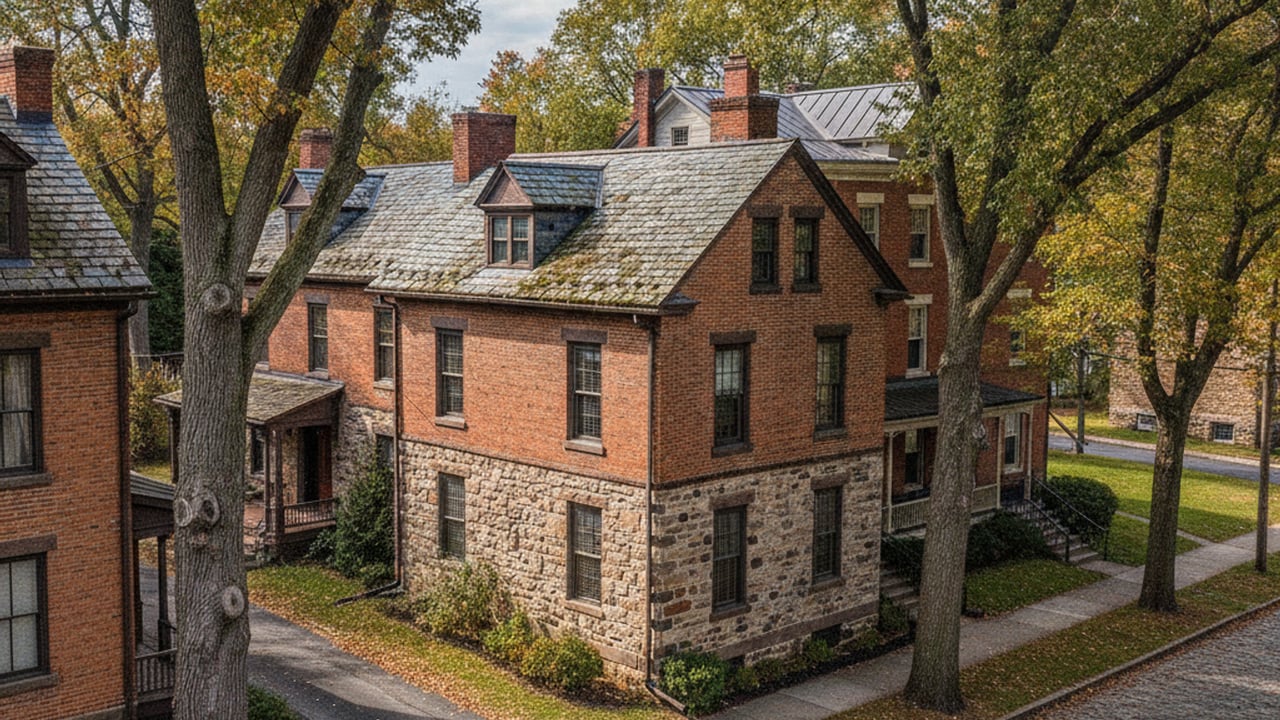
If you are planning on living in Hagerstown, MD and buying a home, you're almost certainly looking at a house with a story. With median home prices hovering around $240,000 and properties spending roughly 52 days on the market in 2026, a lot of what's available here dates to the 19th and early 20th centuries - brick facades, original woodwork, stone foundations. Understanding where this city came from helps you make sense of what you're actually buying.
The street grid, the industrial bones, the density near downtown - none of that is accidental. It's the product of a specific history, and knowing that history makes you a sharper buyer.
A Quick Look at Hagerstown's Past
The story starts in the mid-1700s, well before Hagerstown became the seat of Washington County. Jonathan Hager formally laid out the town in 1762, positioning it as a frontier stop for traders and settlers pushing west. It incorporated in 1813, which cemented its status as something more permanent than a waypoint on the road to somewhere else.
Today it's a fully incorporated city with an identity built on transportation and manufacturing - not just a regional town that happened to grow.
City, Town, or Neighborhood?
Hagerstown is an independent, incorporated city. It's the primary economic and cultural center for the surrounding rural communities, and as the county seat, it handles major municipal services and government functions for the region.
Buyers browsing the 185 or so homes currently in local inventory will find the city covers a real range - dense urban blocks near downtown, more spacious suburban-style lots further out, all within the same city limits.
Hagerstown's Location and County Ties
Hagerstown sits in the panhandle of Maryland, tucked between the Pennsylvania and West Virginia borders, and serves as the official county seat of Washington County. It anchors the Hagerstown-Martinsburg, MD-WV Metropolitan Statistical Area - a broader region that pulls in Washington County, MD, alongside Berkeley and Morgan Counties in West Virginia.
That metro designation matters for understanding economic context, but the city itself stays neatly within Washington County lines.
Is Hagerstown in Multiple Counties?
The city limits are contained entirely within Washington County. The metro area crosses state lines, but Hagerstown itself doesn't straddle any county border.
That means residents deal with Washington County property taxes and county administrative services - one jurisdiction, not two. The Washington County Courthouse sits right in the center of town and handles the regional legal and civic workload.
How Hagerstown Got Its Name
The city is named after Jonathan Hager - German immigrant, fur trader, and gunsmith. When he laid out the streets in 1762, he actually called it Elizabethtown, or Elizabethtowne, after his wife. That name held in formal documents for several decades, but locals consistently called it "Hager's Town." Eventually the Maryland legislature caught up with popular usage and made it official.
The Meaning Behind the Name
Literally: the town belonging to Hager. It's a direct marker of the German immigrant influence that shaped early western Maryland, and Hager's presence was more than nominal. His work as a gunsmith and trader established the settlement as a practical supply point for pioneers heading into the Ohio River Valley - which is why people stopped there in the first place.
The Founding and Timeline of the City
The timeline actually predates the town's founding. Jonathan Hager built his original stone home in the area in 1739, then spent the next two decades acquiring land and developing trade relationships before laying out the formal street plan in 1762. Incorporation followed in 1813.
After that, the city's growth tracked closely with American infrastructure expansion - particularly railroads and paved turnpikes, which transformed what had been a frontier outpost into a legitimate commercial center.
Early Settlement to Industrial Growth
Through the 19th century, Hagerstown built out a serious manufacturing base. Factories producing textiles, machinery, and more went up along the rail lines, taking full advantage of the city's position at a natural crossroads of trade routes. By the 20th century, the economy had shifted toward aviation and heavy industry.
That long arc of commercial evolution is why the city looks the way it does - layers of historic commercial buildings and vintage residential architecture stacked up across different eras.
Historic Landmarks and Museums to Visit
Hagerstown takes its history seriously, and there's real infrastructure in place to prove it. The most significant site is The Hager House - Jonathan Hager's original 1739 stone home, which opened to the public as a museum in 1962. It sits in Hagerstown City Park and gives visitors a direct look at 18th-century frontier construction.
Downtown, the Washington County Courthouse anchors both the civic life of the city and its architectural identity.
Local History Museums
The Washington County Historical Society, located at 135 W. Washington St., maintains extensive archives and exhibits on the region's development - useful if you're trying to research a specific property. The Doleman Black Heritage Museum focuses on African-American history in Hagerstown and Washington County. For the industrial side, the Hagerstown Roundhouse Museum dedicates itself entirely to local railroad history.
If you're buying an older home here, spending a few hours at one of these institutions isn't a bad investment of your time.
What Hagerstown is Known For Today
The nickname "Hub City" isn't marketing - it reflects something real about this place. Hagerstown sits at the intersection of the Warrior Trading Path, now Route 11, and the First National Road, now Route 40. That crossroads position defined the city's economy for centuries.
The city also carried the nickname "Home of the Flying Boxcar" during its peak aviation years. Fairchild Aircraft built the C-119 cargo plane right here in Hagerstown, which left a lasting mark on the city's identity and its industrial heritage.
Famous Faces from the Area
The list of notable Hagerstown natives is an eclectic one. It includes 1940s character actor Rondo Hatton, U.S. Army artillery officer Samuel B. Ringgold, Edmund McIlhenny - founder of the McIlhenny Company and creator of Tabasco sauce - and Henry Yesler, an early mayor of Seattle and a significant figure in the Pacific Northwest timber industry.
Not a bad roster for a mid-sized Maryland city.
Frequently Asked Questions About Hagerstown Real Estate
Which Hagerstown neighborhoods are best for finding well-preserved historic homes?
It depends on the era you're looking for. Well-preserved 19th-century architecture tends to concentrate near the downtown commercial center and around the Washington County Courthouse. Properties near Hagerstown City Park also feature older, established homes in the vicinity of The Hager House.
What exterior renovation restrictions apply if I buy a house in a Hagerstown historic district?
Restrictions typically do apply. If you're buying near landmarks like the Washington County Courthouse, check with the city planning office before touching the exterior. The city enforces specific guidelines to maintain the area's 19th-century architectural character.
Are there local or state tax credits available for restoring historic properties in Hagerstown, MD?
Maryland offers state-level historic rehabilitation tax credits for qualifying properties. If you're looking at historic homes in Washington County, talk to a tax professional about whether your planned renovations meet the state's preservation standards.
How can I find out if a Hagerstown house is officially designated on the local historic register?
Start with the Washington County Historical Society at 135 W. Washington St., or go through the city's municipal records. Both maintain information on properties with official historic designations, alongside landmarks like The Hager House.
What common red flags should I look for when inspecting century-old homes in Hagerstown?
Pay close attention to the foundation, plumbing, and electrical systems. A lot of homes built during the city's industrial boom in the late 19th and early 20th centuries may still have outdated wiring or aging stone foundations that need specialized repair work - neither of which shows up on a casual walkthrough.
Does being located in a Hagerstown historic district typically increase a home's resale value?
It depends on the condition of the property and buyer demand. The median sale price in Hagerstown sits around $240,000, but fully restored historic homes near major landmarks often command higher prices because of their architectural details. "Historic" is only an asset if the house has been properly maintained.