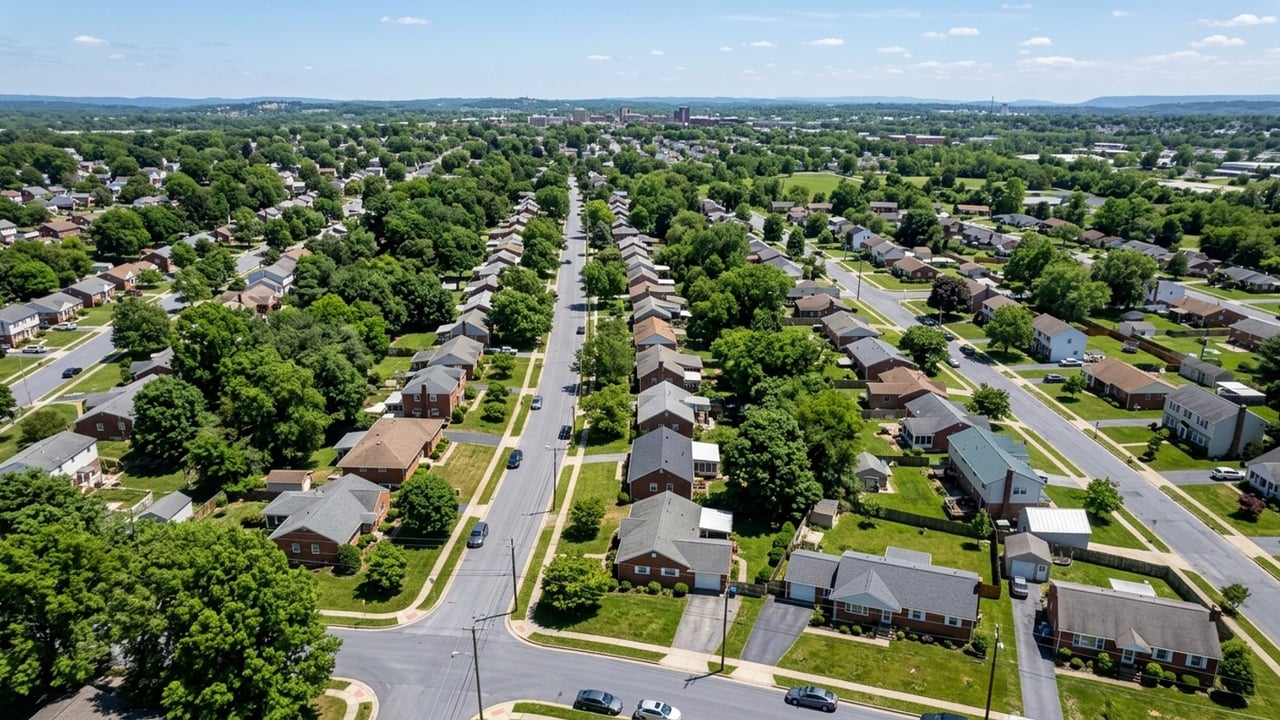
If you are thinking about buying a rental property in Williamsport, MD, the biggest question is simple: does this small town actually support steady rental demand? The data says yes, but the opportunity is more nuanced than chasing a single rent estimate or a low list price. You need to understand the town’s renter-heavy housing mix, older property stock, and local compliance rules before you commit. Let’s dive in.
Why Williamsport Draws Rental Investors
Williamsport has a small-town footprint, but it is not just a sleepy buy-and-hold market with occasional rental demand. The town had 2,083 residents and 1,076 housing units in the 2020 Census profile, with about two-thirds of its housing occupied by renters in both the 2020 Census profile and the 2020-2024 ACS profile.
That renter concentration matters. It suggests Williamsport has a real rental market with ongoing tenant demand, rather than a market driven mostly by owner-occupants. The 2020-2024 ACS profile also reported a rental vacancy rate of 5.1%, which points to an active but not overbuilt market.
Location also adds to the long-term appeal. Williamsport sits near the I-81 and I-70 corridor and is tied closely to the Potomac River, Conococheague Creek, and the C&O Canal area. That mix of access and local character can support demand over time, though it should be treated as part of your overall underwriting, not as a guarantee of appreciation.
Williamsport vs. Washington County
It helps to compare the town to the larger county around it. Washington County’s estimated population reached 157,731 in 2025, which was up 2.0% from 2020. That tells you the broader county is still growing, even if modestly.
Williamsport stands out because it is much more renter-focused than the county overall. Countywide renter occupancy was 30.7%, while Williamsport remained around two-thirds renter-occupied. For an investor, that means the town behaves differently from many other Washington County submarkets.
There is also a value difference to keep in mind. Williamsport’s median owner-occupied home value was $227,900, compared with $283,700 countywide. That gap can make Williamsport more approachable from an acquisition standpoint, but it may also point to a lower resale ceiling than some nearby areas.
What Rental Properties Fit Best
Williamsport is not just a single-family market. The 2020-2024 ACS profile shows a mixed housing inventory that includes detached homes, attached homes, duplexes, and larger multifamily buildings.
Here is the breakdown of housing types in Williamsport:
- 32.6% 1-unit detached
- 11.3% 1-unit attached
- 5.9% 2-unit buildings
- 10.9% 3-4 unit buildings
- 9.0% 5-9 unit buildings
- 17.8% 10-19 unit buildings
- 12.6% 20+ unit buildings
That mix tells you something important. Small multifamily is a real part of the local inventory, not a niche product. If you are looking at duplexes, triplexes, four-unit properties, or small apartment buildings, you are shopping within an established part of the market.
Bedroom mix adds another clue about likely demand. The housing stock is 50.6% two-bedroom, 26.9% three-bedroom, and 14.4% one-bedroom. In practical terms, well-kept 2-3 bedroom houses, duplexes, and smaller apartment units are likely to line up with a large share of local demand.
Older Housing Means More Due Diligence
One of the biggest factors in Williamsport is age of housing stock. About 31.9% of units were built in 1939 or earlier, and another 24.3% were built in the 1970s.
That does not make older properties a bad investment. It does mean you should underwrite them with more care. Roofs, plumbing, electrical systems, heating, insulation, and general deferred maintenance can affect your cash flow much faster in older housing than in newer product.
You should also plan for code-related work. Washington County administers current building and livability codes, including adopted 2021 building codes and a Livability Code. If a property needs updates before it is truly tenant-ready, those costs need to be part of your numbers before you close.
What Rents Look Like in Williamsport
Williamsport’s rent profile is centered in the low-to-mid $1,000s. The 2020-2024 ACS profile reported a median gross rent of $1,262.
The same profile showed this rent distribution:
- 23.3% of renter households paid $500-$999
- 55.4% paid $1,000-$1,499
- 13.5% paid $1,500-$1,999
That range is useful because it shows where much of the market competes. If you are underwriting a standard rental in Williamsport, your likely target rent band will often fall inside that middle range unless the property has features or condition that clearly support a higher number.
Live asking-rent data gives another layer of context. As of February 2026, Apartments.com showed an average rent of $1,164 in Williamsport, while Zillow Rental Manager showed an average of $1,367. Apartments.com also showed about $1,350 for one-bedroom units and about $1,493 for two-bedroom units.
The key is to use those live figures carefully. Asking rents are not the same as ACS gross rent, and this is a small market. Town-level numbers should be treated as directional, while actual current comps and the subject property’s condition should carry more weight.
Build Your Numbers Around Real Expenses
A rental property can look solid on paper until the operating costs show up. In Williamsport, your analysis should go beyond principal and interest and include taxes, utilities, compliance, and reserves.
Washington County real property tax rates are set annually by the County Commissioners and applied to assessed value. The county also bills property taxes on its own levy cycle, so you should underwrite those payments as a normal operating expense.
There is one scheduling detail many first-time investors miss. Washington County’s semi-annual tax payment program applies to principal residences, but rental units and commercial real property are not eligible. That means you should not assume homeowner-style tax timing when planning your cash flow.
Utility costs matter too, especially if the property is served by county water and sewer. Washington County’s FY2027 water-quality schedule, effective July 1, 2026, lists residential full-service base charges of $151.07 per quarter for sewer and $127.23 per quarter for water, plus volume charges and a residential Bay Restoration Fund fee of $15 per quarter.
If the property is not on county water and sewer, verify well and septic conditions carefully. Replacement and repair costs can materially change your long-term expense picture.
Lead Rules and Lease Compliance Matter
For many Williamsport rentals, legal readiness starts with lead compliance. The Maryland Department of the Environment requires pre-1978 rental properties to be registered, renewed every two years under the current schedule effective January 1, 2026, and maintained as lead-safe or lead-free as required.
If you buy a pre-1978 rental property, registration and certification are not optional checklist items to handle later. They should be part of your acquisition plan from the start.
Lease paperwork also requires attention. Beginning July 1, 2025, the Maryland Tenants’ Bill of Rights must be attached to every lease. That is a simple step, but it is one more reason to have your lease package ready before advertising a unit.
There is another rule that matters for small multifamily investors. If you plan to sell a property with three or fewer residential rental units, current tenants must be given the first opportunity to make an offer to buy. That can affect your exit strategy for 1-4 unit properties.
Flood Screening Should Be Standard
Williamsport’s identity is tied to the river and canal corridor, which is part of what makes the town appealing. It also means flood screening should be part of every investor’s due diligence process.
Flood risk is not something to assume based on a street name or general location. Maryland’s floodplain rules rely on FEMA Flood Insurance Rate Maps and local permitting for mapped floodplain work, so the right approach is parcel-specific verification before closing.
If a property is near the Potomac or other low-lying areas, this step becomes especially important. Insurance costs, renovation limits, and long-term risk can all shift based on flood-zone status.
A Smart Buying Strategy for Williamsport
The strongest fit in Williamsport appears to be well-kept small houses, duplexes, and small apartment buildings that compete on condition, functionality, and location. That lines up with the town’s renter-heavy profile, its meaningful share of 2-3 bedroom units, and its existing multifamily inventory.
The best underwriting approach is to triangulate three sources of information:
- Live asking-rent comps for similar available units
- ACS rent and housing data for the town and county
- Property-specific costs such as taxes, water/sewer, lead compliance, repairs, and flood exposure
That method is especially important in a market this size. A single average rent number will not tell you enough, and a bargain purchase price can quickly lose its appeal if the building needs major work to become compliant and tenant-ready.
If you want to buy an income property in Williamsport with a clear strategy, local guidance can save you from expensive assumptions. Steve L Powell with Steven L Powell brings deep Washington County market experience, investor-focused insight, and a disciplined approach to property evaluation so you can move forward with confidence.
FAQs
What makes Williamsport, MD attractive for rental property buyers?
- Williamsport has a renter-heavy housing base, a mixed inventory of small houses and multifamily properties, and access to major highway corridors near I-81 and I-70.
What type of rental property works best in Williamsport, MD?
- Well-kept 2-3 bedroom houses, duplexes, and small apartment buildings appear to fit the local housing mix and renter demand best.
What is the average rent range for Williamsport, MD rentals?
- The 2020-2024 ACS reported a median gross rent of $1,262, with most renter households paying between $1,000 and $1,499 per month.
What extra costs should rental property buyers plan for in Williamsport, MD?
- In addition to mortgage costs, you should budget for property taxes, water and sewer charges if applicable, maintenance reserves, code-related repairs, lead compliance, and possible flood-related costs.
What legal issues matter when buying an older rental in Williamsport, MD?
- For pre-1978 rentals, Maryland lead registration and certification rules are a major requirement, and current lease paperwork must include the Maryland Tenants’ Bill of Rights.
Why should investors check flood zones before buying in Williamsport, MD?
- Because Williamsport is tied to the Potomac River corridor, flood-zone status can affect insurance, renovation planning, and long-term operating risk on a parcel-by-parcel basis.