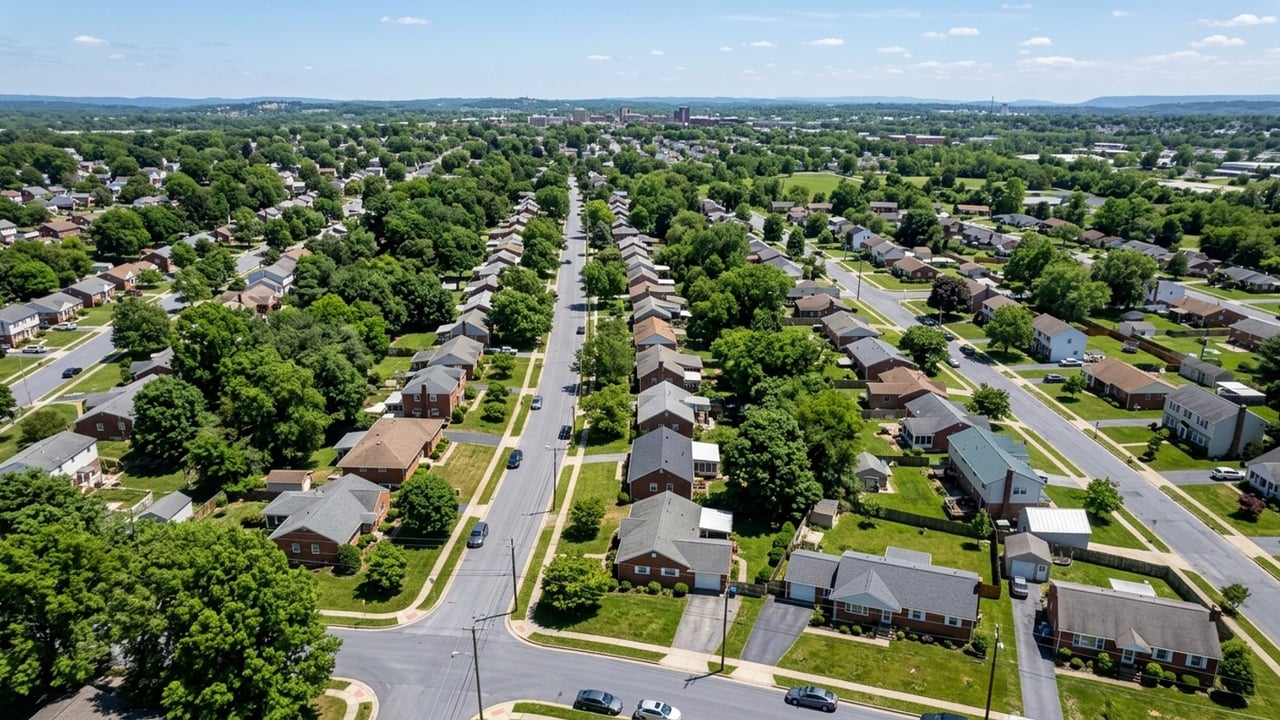
Hagerstown sits at a major logistics crossroads in Washington County - not exactly a secret among investors who've gotten priced out of the Baltimore and D.C. suburbs and started looking west. The entry points in the Hagerstown, MD housing market are lower, the cash flow math works more often, and the competition isn't what you'd face closer to the Beltway.
Right now there are around 185 active listings across the market, ranging from historic downtown renovations to mid-century single-family homes to multi-unit conversions. Whether you're flipping or building a long-term portfolio, you need to understand the local numbers before any of that matters.
Evaluating Hagerstown for Real Estate Investment
The headline number: the median sale price in Hagerstown, MD is sitting around $240,000, which is an approximate 7.5% drop year-over-year. Normally a price drop would give you pause, but rental rates have been climbing steadily at the same time. When purchase prices soften and rents rise, the rent-to-price ratio improves - and that's what buy-and-hold investors are actually chasing.
Current Market Snapshot
Homes are spending roughly 52 days on the market before closing, and the average sale-to-list ratio is hovering around 98.3%. You've got a little room to negotiate - not a lot, but more than you would have had a few years ago.
Renters are currently paying a median of $1,400 per month, up 3.7% year-over-year. That's still about 28% below the national average, which is a real selling point if you're trying to attract tenants relocating from pricier Maryland metros. Lower rent means lower vacancy risk.
Assessing Market Balance and Trends
With 4.1 months of housing supply, Hagerstown is tilting toward balanced - buyers have more leverage than they did, and only about a third of homes are selling above list price. Short-term, the median has dipped to $240,000. Longer term, NeighborhoodScout data shows cumulative appreciation of nearly 95% over the last ten years, averaging a 6.9% annual growth rate. The short-term softness doesn't erase that track record.
Population Growth and Tenant Demand
Hagerstown is the county seat of Washington County, with a 2026 population of approximately 44,370 growing at 0.32% annually. Modest, but consistent. The city functions as a regional hub for healthcare, logistics, and manufacturing, which means your tenant pool isn't just one type of worker - you're drawing from long-term residents and transient workers alike. That mix supports both standard annual leases and alternative rental structures.
Neighborhoods Attracting Investors
The North End and Northwest Hagerstown come up consistently when local analysts talk about steady property values. These areas offer established stability, which matters for long-term buy-and-hold investors who don't want to babysit a property.
Fountainhead-Orchard Hills is another name you'll hear. Larger single-family homes, more green space, suburban feel without being far from the city center - it draws renters who want a quieter environment but still need to be close to work.
The Downtown Hagerstown Historic District is different in character. It's an entry point for buyers who want to be part of the city's ongoing revitalization, but the historic designation limits what you can do to the exterior. Know that going in.
Strategies for Building a Hagerstown Portfolio
The strategy you pick determines which of those 185 listings are even worth your time. Buy-and-hold investors typically focus on multi-family properties or single-family homes in the North End, targeting that $1,400 median rent. Flippers tend to gravitate toward the city center, where older housing stock creates opportunities for forced appreciation through renovation.
House Flipping and the 70% Rule
The 70% rule is the standard starting point for flippers: don't pay more than 70% of the after-repair value minus your repair costs. Simple in theory, but with Hagerstown homes sitting on the market for an average of 52 days, holding costs are real. Property taxes, utilities, and insurance will steadily erode that 30% margin while you wait for a buyer. Build that time into the math before you make an offer.
Historic district properties add another layer - exterior renovations often require approval, which can push your timeline out further and increase what you spend.
Common Metrics for Rental Properties
The 1% and 2% rules are quick screening tools: a property should ideally rent for 1% to 2% of its purchase price per month. At Hagerstown's $240,000 median, hitting the 1% mark means $2,400 a month in rent - well above the city's $1,400 median. Single-family investors rarely hit that target here, which is why multi-unit properties get so much attention.
Some investors instead target a 7% annual capitalization rate using what's called the 7% rule. Others plan their timelines around the 3-3-3 rule: three months to find a property, three months to renovate it, three months to stabilize it with a tenant. None of these rules replace detailed underwriting, but they're useful for filtering a list of 185 options down fast.
Operating Short-Term and Month-to-Month Rentals
Short-term rentals are explicitly allowed in Hagerstown, but the city put a formal licensing program in place on June 20, 2023. You can't just list a property and start collecting - there's a process.
Month-to-month and furnished rentals serve a different slice of the market: traveling nurses, logistics contractors, buyers in transition. These medium-term setups often sit outside standard overnight rental regulations while still commanding a premium over a 12-month lease.
Hagerstown Short-Term Rental Regulations
To operate legally, you need a Lodging Facilities License. That means passing inspections from both the Planning and Code Administration Department and the Fire Department, providing proof of liability insurance, and completing annual human-trafficking-awareness training. On the tax side, you're required to collect a 6% Maryland sales tax and a 6% Washington County lodging tax from guests.
Washington County Rules and Profitability
Outside city limits, Washington County allows STRs in rural areas as principally permitted uses. In residential districts within the county, short-term rentals are only allowed by special exception - a meaningful distinction if you're looking at county parcels.
For profitability modeling, investors often use the 75/55 rule: assume 75% occupancy and that operating expenses consume 55% of gross revenue. It's a conservative baseline that helps you stress-test the numbers before you commit.
Commercial Real Estate and Mixed-Use
Hagerstown's position near Interstate 81 and Interstate 70 makes it a legitimate commercial market, not just a residential one. Downtown mixed-use buildings - ground-floor retail with apartments above - can diversify income from a single property.
Before buying on the commercial side, factor in local property tax rates and zoning overlays. A local commercial broker can tell you quickly which buildings are zoned for which uses and which aren't, saving you time on deals that won't work.
Financing and Preserving Property Value
Investment property financing isn't the same process as buying a primary residence. Lenders typically want 20% to 25% down and will look at the property's potential rental income when evaluating your debt-to-income ratio. Come prepared with that documentation.
Once you own the property, deferred maintenance is your biggest threat. Outdated electrical or plumbing systems and unpermitted work are among the top factors that devalue a house when it's time to sell or refinance. Staying ahead of those issues isn't optional if you want the asset to hold its value.
Working with a Local Specialist
Hagerstown has its own rhythms that national data doesn't fully capture. A local investment specialist can tell you which blocks in the North End or Fountainhead-Orchard Hills actually command the highest rents - not theoretically, but in practice. They can help you read that 4.1 months of inventory correctly and filter those 185 active listings down to the ones that fit your financial model. Making offers based on national averages in a market this specific is how you leave money on the table.
Frequently Asked Questions
Which neighborhoods in Hagerstown offer the best ROI for rental properties?
Local real estate analysts point to the North End and Northwest Hagerstown for steady property values and lower crime metrics. Fountainhead-Orchard Hills is a consistent target for single-family rentals. The Downtown Hagerstown Historic District offers lower entry-level pricing for buyers interested in revitalization projects, though the historic designation comes with renovation constraints worth understanding before you commit.
What kind of cap rates are investors currently getting in Hagerstown?
It varies by purchase price and property condition. With a median sale price of $240,000 and median rents around $1,400, most single-family investors find they need to buy below the median or target multi-unit properties to hit a 7% cap rate or better.
Do I need a special license or inspection to rent out a house in Hagerstown, MD?
If you're operating a short-term rental, yes - the city requires a Lodging Facilities License, which includes inspections by both the Fire Department and the Planning and Code Administration Department. You'll also need proof of liability insurance and annual human-trafficking-awareness training.
Is Hagerstown a better investment market than nearby Frederick or Martinsburg?
Depends on your budget and goals. Hagerstown's median home price of $240,000 gives you a lower barrier to entry than higher-priced Maryland metros, which often translates to better immediate cash flow potential. Appreciation rates will differ across the region, so the right answer really comes down to your specific strategy.
What are the biggest risks when flipping houses in downtown Hagerstown?
The Downtown Hagerstown Historic District has specific preservation guidelines. Exterior renovations, window replacements, and material choices frequently require approval, which extends your holding period and adds to renovation costs. If you're running the 70% rule on a downtown flip, account for that extra time.
What is the current tenant demand and average vacancy rate in the Hagerstown area?
Tenant demand is steady. A growing population of 44,370 and a median rent of $1,400 - sitting 28% below the national average - keep the area attractive to renters. Specific vacancy rates fluctuate, but the 3.7% year-over-year rent increase suggests continued strong demand from tenants.