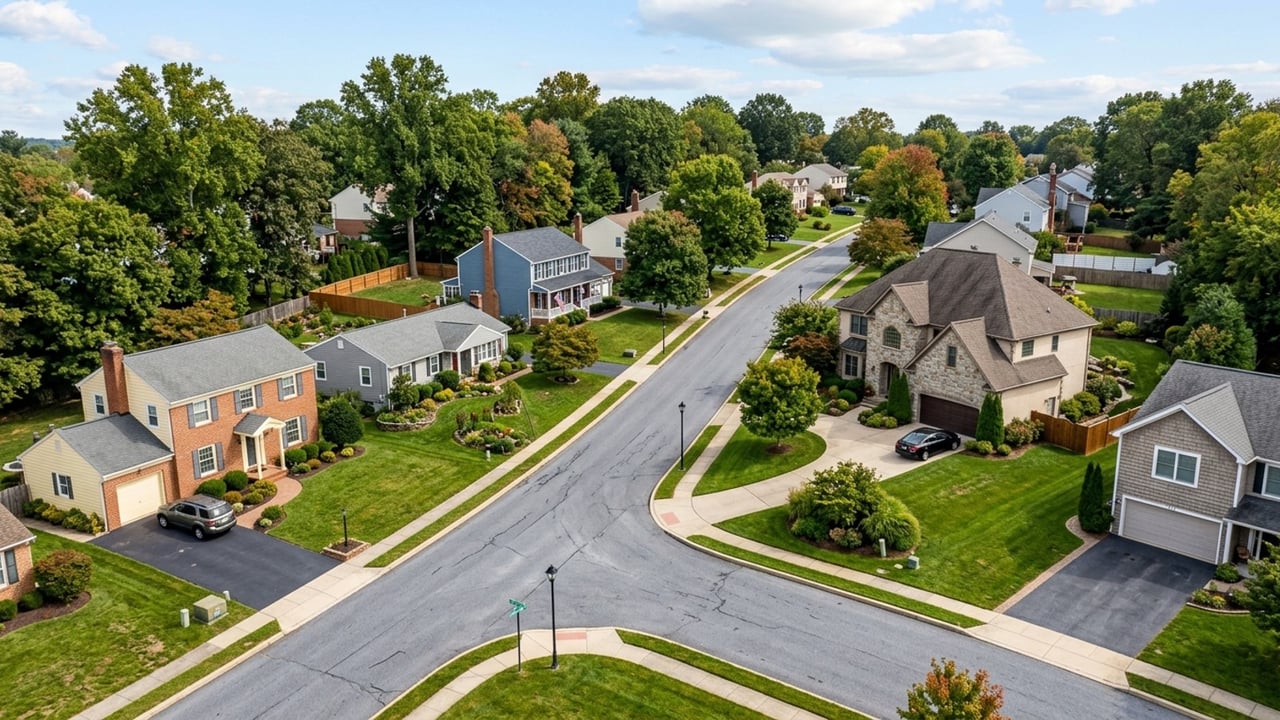
If you're coming from the D.C. or Baltimore metro area, the first thing you'll notice about the Hagerstown housing market is that your dollar goes further. Washington County sits far enough from the coast to avoid the worst of Maryland's housing costs, and for a lot of renters, that's exactly the point.
What you'll pay month-to-month depends on where in the city you land, how many bedrooms you need, and what time of year you're signing. There's no single number that captures all of that - so let's break it down properly.
Current Average Rent in Hagerstown, Maryland
Hagerstown rent prices fall well below the Maryland state average. That gap is mostly a function of the state's numbers being pulled upward by the D.C. suburbs - Montgomery County, Howard County, that corridor. Hagerstown doesn't compete in that league, which works in your favor if you're budgeting.
National averages have the same problem. They're skewed by high-cost coastal markets and don't tell you much about what you'd actually pay here. Before you set a firm housing budget, check current listings from local property management companies - inventory shifts seasonally, and posted rates reflect that more accurately than any annual average will.
Rent Across Different Unit Types
The overall average rent blends everything from a compact downtown studio to a large single-family home, so it's more of a reference point than a planning number. If you're looking for a specific layout, you want the median for that unit type - not the aggregate. Luxury developments and large estates hitting the rental market can skew the average in ways that won't match your actual search.
Comparing Hagerstown to State and National Averages
Renters here generally pay less than the national average. That lower baseline gives you more room to manage other living expenses - transportation, savings, whatever you're working toward. It's not dramatic, but it's real.
Rent by Bedroom Size and Unit Type
Your household size sets the floor for what you'll spend. A one-bedroom costs less to rent, heat, and cool than a three-bedroom townhome - that math is straightforward. Property managers price by square footage and bedroom count, so each step up in size comes with a corresponding price increase. The jump from a one-bedroom to a two-bedroom is usually moderate; three-bedroom properties carry a steeper premium, especially once you move out of traditional apartment buildings and into townhomes and single-family houses.
Studios and one-bedrooms are the most affordable entry point. You'll find a lot of these in older, repurposed buildings near the city center, and newer complexes offer them too - though modern amenities come at a higher monthly cost. Two-bedrooms make up a solid portion of Washington County's standard apartment inventory and work well for roommates or small households. If you're hunting for three bedrooms, budget for higher utility bills alongside the base rent.
Rent by Neighborhood and Zip Code
Location moves the price as much as square footage does.
The 21742 zip code covers the North End - newer developments, larger single-family homes, more suburban-style subdivisions. You pay a premium there for driveways, bigger yards, and updated interiors. Demand for those features keeps North End rents higher than the rest of the city.
The 21740 zip code covers the City Center and the southern portions of Hagerstown. If budget is your first priority, this is where to start your search. Historic buildings in this district frequently house multi-unit apartments at lower monthly rates. The trade-offs are real - street parking, older heating systems - but the savings are real too. Renters who know what they're getting into tend to find good value here.
Rent Trends and the Local Rental Market Outlook
There are currently about 185 homes for sale in Hagerstown, and that number matters to renters too. When fewer people are buying, more residents stay in the rental pool, which tightens available inventory and can push rents up even when nothing else changes.
Year-over-year rent shifts in Washington County track local job growth, new construction, and how many new residents are arriving. If builders don't keep pace with demand, rates move higher. Tenants renewing leases often see annual increases tied to inflation and Maryland property taxes - knowing the trend line helps you anticipate what's coming at renewal time.
Washington County has more room for residential expansion than the denser parts of the state. That land availability helps moderate long-term cost increases in a way that isn't possible in more built-out counties. Hagerstown also sits far enough from the D.C. metro that it avoids the steepest rent pressure seen in places like Montgomery or Howard counties. That distance is a feature, not just a fact.
Calculating How Much Rent You Can Afford
The standard guideline is 30% of your gross monthly income on housing. Financial advisors have used that benchmark for years, and landlords use it too - most property managers apply this ratio when evaluating applications.
The math is simple: multiply your annual salary by 0.30 and divide by 12. At $60,000 per year, that puts your target maximum at $1,500 per month. The 30% figure is based on gross income - what you earn before taxes and deductions - so keep that in mind when you run the numbers.
One caveat worth taking seriously: if you're carrying significant debt - student loans, a car payment - you should aim lower than 30%. The rule assumes housing is your primary financial obligation. When it isn't, you need more cushion than the formula provides.
A cleaner approach is to total all your estimated monthly costs - rent, utilities, insurance, internet - before you sign anything. That full picture tells you more about what you can actually handle than the 30% rule alone.
Cost of Living: Renting vs. Buying in Hagerstown
The median home value in Hagerstown sits around $240,000 as of mid-2026. For a lot of renters, that number is close enough to make buying a real conversation rather than a distant goal.
Homes are spending roughly 52 days on the market before selling, and there's about 4.1 months of supply available - enough breathing room that you're not walking into intense bidding wars. Recent data shows the median sale price dropped about 7.5% year-over-year. When purchase prices are cooling, a mortgage payment can get competitive with monthly rent on a comparable property.
Only about a third of homes are selling above list price, and the average sale-to-list ratio is around 98%. If you're thinking about making the jump from renting to owning, these are the numbers to watch.
Comparing Hagerstown to Nearby Frederick
Hagerstown is consistently less expensive than Frederick, MD. Commuters regularly choose Washington County over Frederick County to get a lower payment or more square footage - sometimes both. The trade-off is a longer drive if you're working closer to Baltimore or Washington, D.C. Whether that commute is worth the monthly savings is a personal calculation, but renters who run the numbers carefully often find it pencils out.
Finding Apartments and Rentals in Washington County
Your search will pull from local property management sites, online portals, and community boards. Available units run the full range - managed apartment complexes, privately owned single-family homes, everything in between.
Get your paperwork together before you start touring. Proof of income, a photo ID, and references - having those ready means you can move fast when you find the right place, and affordable units in this market tend to lease quickly.
Pet-friendly rentals typically require an upfront deposit plus a monthly pet fee. Breed restrictions and weight limits are common, so confirm those policies before you apply - not after.
If flexible lease terms matter to you, private landlord listings are worth the extra search effort. By-owner rentals turn up on local community boards and social media groups and often come with more room to negotiate than corporate property management companies offer. Standard long-term rentals require a 12-month commitment, but signing a longer lease can also work in your favor - locking in your rate protects you from short-term increases.
Frequently Asked Questions (FAQ)
How much is the average rent for a 1-bedroom apartment in Hagerstown, MD?
Prices vary based on the building's age and amenities. Units in the City Center (21740) generally cost less than comparable units in the North End (21742). Check current local listings for the most accurate figures - posted rates move with inventory.
Which neighborhoods in Hagerstown have the most affordable rental rates?
The City Center and the 21740 zip code tend to offer the lowest rents. Older, repurposed buildings in this area provide lower monthly rates than newer suburban developments - the trade-off is usually older systems and street parking rather than private driveways.
How does the cost of renting in Hagerstown compare to nearby cities like Frederick?
Hagerstown is generally less expensive than Frederick. Many renters choose Washington County over Frederick County for lower monthly housing costs, with the understanding that it means a longer commute to major employment hubs.
How much income do I need to make to qualify for an average-priced rental in Hagerstown?
Most landlords require gross income of at least three times the monthly rent. Apply the 30% rule to the specific unit you're considering - that'll give you a working target for what salary you'd need to qualify.
Are rent prices in Hagerstown currently going up or down?
It depends on local demand and available inventory. The median home purchase price saw a 7.5% year-over-year decrease recently, but rent prices operate on a different timeline - they're tied to annual lease renewals and local inflation rather than sale transactions.
Do average rent prices in Hagerstown typically include utilities like water and trash?
It depends on the property and the landlord. Multi-unit apartment buildings often include water and trash in the base rent. If you're leasing a single-family home, plan to pay all utilities separately.