If you're shopping along the Interstate 81 corridor, chances are you've already started weighing the pros and cons of living in Hagerstown, MD versus Chambersburg, PA. They sit roughly 25 miles apart with a state line between them - and that line matters more than the mileage. You're looking at different tax structures, different price points, and different commute math depending on where you work.
Both cities give you reasonable access to major employment hubs, though Hagerstown's position on Interstate 70 puts Washington, D.C. and Baltimore meaningfully closer. The decision really comes down to what you get for the money once you factor in cross-state property taxes, commute times, and what's actually available to buy.
Comparing Local Housing Markets
Washington County, MD and Franklin County, PA don't operate at the same price point, and the state line has a real effect on inventory levels and what sellers expect to get. These aren't interchangeable markets with a minor geographic variation - the dynamics are genuinely different.
Hagerstown currently has about 185 active listings, which works out to roughly 4.1 months of supply. That's enough room to be selective without the luxury of taking forever.
Home Prices and Inventory
In Hagerstown, the median sale price sits at approximately $240,000 as of mid-2026. Homes are averaging 52 days on the market, and sellers are landing about 98.3% of their list price - so there's not a lot of room to lowball.
Chambersburg runs higher. List prices on platforms like Movoto were hovering around $339,000 to $340,000 in late summer 2026. Zillow pegs the average home value closer to $293,162, which still puts it well above Hagerstown's median home value. The gap is real, and it's worth keeping in mind before you assume Pennsylvania is the budget-friendly option.
Property Types and Architectural Styles
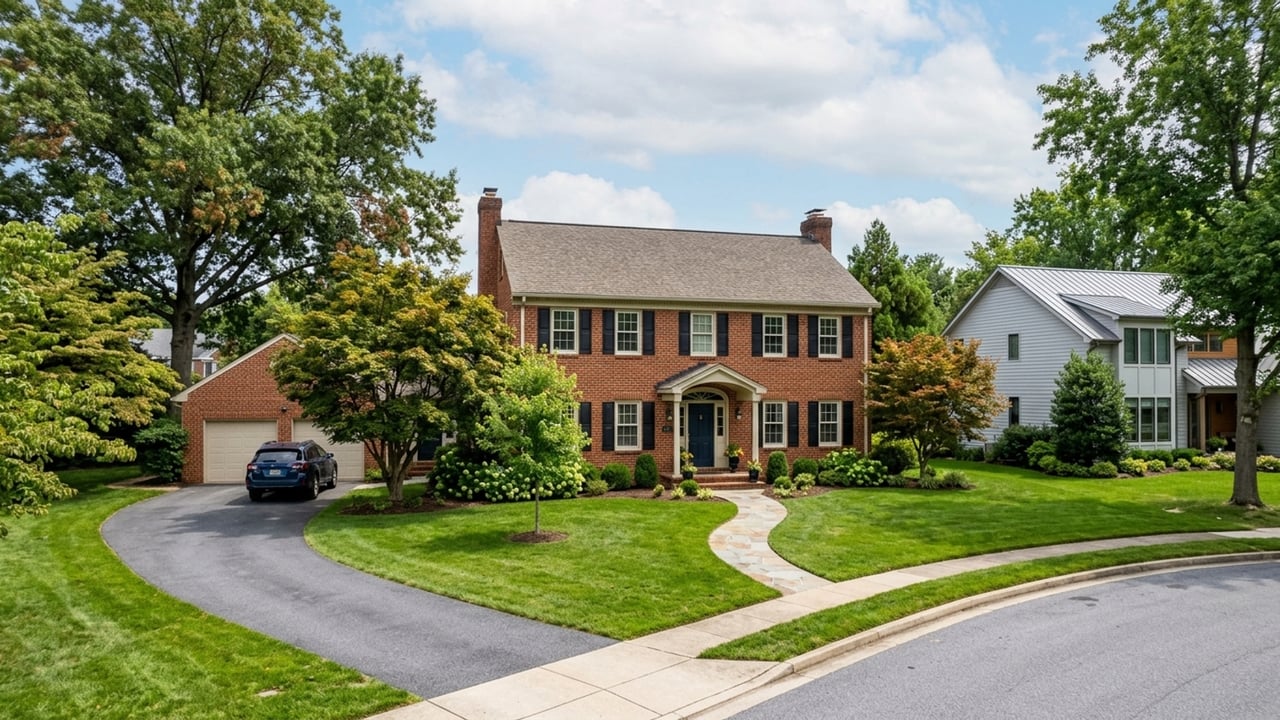
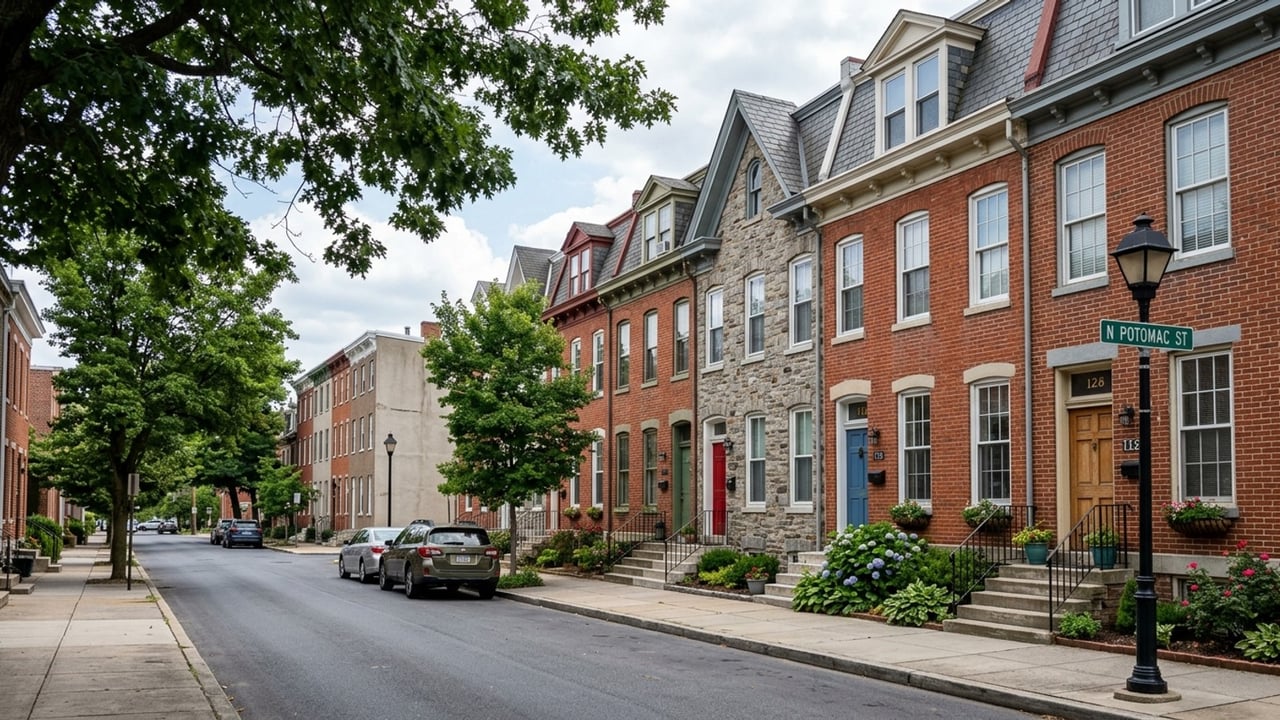
Hagerstown's housing stock is genuinely varied. You'll find historic rowhomes near the city center, older detached houses, mid-century bungalows and ranches - and if you want newer construction with more land, there are subdivisions and townhome communities on the outskirts of town.
Chambersburg's specific architectural data is less centralized, but buyers can generally expect a similar blend of historic borough properties and newer suburban builds. You'll want to spend time driving both areas before you commit to either.
Property Taxes and Living Costs
Washington County, MD keeps things relatively simple. The real property tax rate is $0.9280 per $100 of assessed value, and the county has held that flat rate for 16 consecutive years - right through the fiscal year 2026 budget. You can plan around it.
Cross into Pennsylvania and the math changes entirely. Franklin County uses a millage system rather than a straight percentage of assessed value. That means your actual tax burden depends on both the borough rate and the school district rate, and you'll want to run those numbers for any specific address before you get attached to a property.
County and Municipal Tax Rates
For 2026, the Franklin County millage rate is 29.1 mills - 25.0 for general operations, 4.1 for debt service, plus a separate 1.3 mill library levy. If you're buying within Chambersburg borough limits, add a municipal levy of about 35.5 mills on top of that.
And then there's the school district. The Chambersburg Area School District rate for the 2025-2026 academic year is approximately 136 mills, which is the largest single piece of a Chambersburg homeowner's tax bill.
Homeowner Association and Utility Costs
If you're looking at newer subdivisions or townhome communities in either city, HOA dues are part of the monthly picture. What you pay varies considerably depending on the community's amenities, so don't assume a number - ask for the actual documents.
Utility costs and municipal service fees also shift across the Maryland-Pennsylvania line and affect the overall cost of living in Hagerstown. The honest answer here is that you need to compare providers and fees based on the specific address you're considering, not a general estimate for either city.
Commute Times and Highway Access
Interstate 81 is the spine of daily life for most commuters in this region - it runs north-south through both Hagerstown and Chambersburg. Hagerstown also connects directly to Interstate 70, which is your east-west route into the major Maryland metros.
The drive from Hagerstown to Washington, D.C. covers roughly 68 to 70 miles and runs about 1 hour and 25 minutes under normal conditions. Plan for 75 minutes to two hours during peak hours - that range isn't worst-case, it's just reality on that corridor. Hagerstown to Baltimore is slightly shorter at 72 to 75 miles, typically 1 hour and 18 to 20 minutes outside of rush hour.
Because Chambersburg is roughly 25 miles north of Hagerstown on I-81, buyers commuting toward Maryland or D.C. should add at least 30 minutes to those baseline commute times from Hagerstown. That's not a dealbreaker for everyone, but it's worth putting on paper before you fall in love with a house.
Parks, Recreation, and Local Amenities
Hagerstown has City Park right within the town limits - lakes, walking trails, genuinely useful green space without having to drive anywhere. Both cities maintain commercial districts and downtown areas with access to medical offices, dining, and shopping, though which layout actually suits your daily routine is something you'll only know once you've spent time in both.
State Parks and Green Spaces
A short drive from Hagerstown puts you at Antietam National Battlefield and the C&O Canal towpath, with miles of trails for walking and biking. Residents looking for outdoor activities in Hagerstown also use Catoctin Mountain Park and nearby state parks like Cunningham Falls and Greenbrier.
Chambersburg has its own local parks, though centralized data on specific trails and state lands in that immediate area is less documented. Worth researching directly if outdoor access is a priority.
Commercial Districts and Services
Both Hagerstown and Chambersburg have historic downtowns alongside newer suburban retail. Grocery stores, medical facilities, and entertainment options are spread along the main corridors in each city, and access to I-81 means you can reach neighboring cities when you need more.
Go visit both commercial centers in person. Washington County and Franklin County have different feels on the ground, and that's not something a listing search will tell you.
Deciding Between Maryland and Pennsylvania
Here's the short version: Hagerstown offers a median home price around $240,000 and a flat property tax rate of $0.9280 per $100 of assessed value. If your job is in D.C. or Baltimore, the geography works in your favor.
Chambersburg comes in with average home values around $293,162 and a layered millage-based tax system that you'll need to calculate address by address. Neither city is the obvious right answer - it depends on where you work, what you can afford, and which side of the line makes the numbers work once you run them for real.
Frequently Asked Questions
Are home prices generally more affordable in Chambersburg, PA compared to Hagerstown, MD?
No. Hagerstown's median sale price is approximately $240,000, while Zillow estimates Chambersburg's average home value at $293,162. Chambersburg runs higher on both metrics.
How do property tax rates differ between Hagerstown, Maryland and Chambersburg, Pennsylvania?
Hagerstown uses a flat county rate of $0.9280 per $100 of assessed value. Chambersburg applies a millage system: 29.1 mills at the county level, 35.5 mills for the borough, and 136 mills for the school district.
What is the daily commute like on I-81 if I buy a house in Chambersburg but work in Hagerstown, MD?
Chambersburg is roughly 25 miles north of Hagerstown along Interstate 81. It's a straightforward highway drive, though actual travel times will depend on daily traffic conditions and any construction along the corridor.
How do the local neighborhoods and school districts compare between Hagerstown, MD and Chambersburg, PA?
Hagerstown's neighborhoods include historic rowhomes, mid-century ranches, and newer subdivisions. In Chambersburg, the Chambersburg Area School District is funded at a rate of approximately 136 mills, which represents the largest component of a local homeowner's tax bill.